Otoacoustic Emissions Oaes Are Useful for Which of the Following
Probably the most common use of OAEs in the diagnosis of retrocochlear pathologies is in the diagnosis of auditory neuropathy also called auditory dysynchrony or auditory neuropathy spectrum disorder ANSD other possible uses are in diagnosis of deaf mutism presbyacusis vertigo and tinnitus 5. The clinical applications of otoacoustic emissions are mainly focused on the identification of sensorineural losses in the auditory periphery.
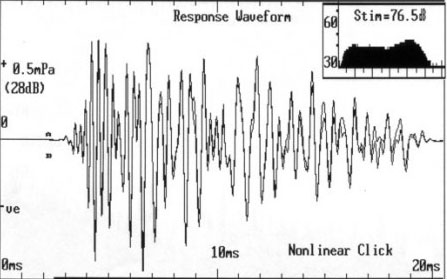
Otoacoustic Emissions Auditory Science Lab
Otoacoustic emissions OAEs permit early detection of inner ear abnormalities associated with a wide variety of diseases and disorders including non-pathologic etiologies like noise exposure and aging.

. Otoacoustic Emissions OAEs Pure-Tone Testing. Otoacoustic emissions OAEs are tiny sounds recorded in the ear canal from the cochlea. Specifically OAEs provide information related to the function of the outer hair cells OHC Stach 2003.
OAEs only measure auditory function up to the cochlear OHC level IHC and retrocochlear dysfunction cannot be measured. Transient evoked otoacoustic emissions and distortion product OAEs DPOAEs. Tests of the Middle Ear.
Over the past 20 years their use in routine audiological assessments has increased significantly. The key interests following the original descriptions of the four types of OAEs-the click- or transient-evoked OAE TEOAE the distortion product. Distortion product otoacoustic emissions DPOAE permanent threshold shifts PTS.
Otoacoustic emissions OAEs evoked by clicks transient evoked OAEs TEOAEs or tone pairs distortion product OAEs DPOAEs are useful in pediatric audiology for screening hearing see earlier and for audiologic diagnostic purposes. Middle ear block any signals going from the cochlea to the microphonethey will not be. OAEs are highly sensitive to physiological noise.
Despite the fact that the otoacoustic emissions signals are affected by alterations in the sound transmission chain outer ear to middle ear and middle ear to outer ear there are no current applications based on. Otoacoustic emissions OAEs testing as a diagnostic service is proven andor medically necessary for the evaluation of hearing loss in one or more of the following. Download supplemental course materials.
Otoacoustic emissions OAEs are the side-products of active amplification of the outer hair cells and are defined as the energy transmitted from the cochlea to the outer ear canal through the middle ear. An otoacoustic emission OAE test may be the solution. Otoacoustic Emissions Testing Policy Professional.
Temporary enhancement of OAEs may occur following noise exposure and permanent. If the hair cells are healthy they will emit a tiny response that can be measured with special equipment. Infants over 90 days old and children up to 4 years of age.
Generally two types of otoacoustic emission are used. 1 In brief as sound is introduced within a healthy ie normal hearing and. The 25th anniversary of the discovery of otoacoustic emissions OAEs-sounds that can be measured in the external ear canal following the presentation of an acoustic stimulus-was celebrated in 2003.
The OAE test is used to find out how well your inner ear or cochlea works. The OAEs are thought to be generated in the outer hair cells of the cochlea. Otoacoustic emissions OAEs are considered to originate from active cochlear processes involving the outer hair cells OHC.
Otoacoustic emissions OAEs were just reported in 1978. Your ear is made up of three partsthe outer the middle and the inner ear. Auditory evoked potentials AEP recorded from the inferior colliculus of the.
Otoacoustic emissions OAEs are sounds produced by the ear when the basilar membrane of the cochlea is stimulated by a sound. This phenomenon is analogous to an active amplifier. And outer hair cell OHC losses were analyzed in a population of 187 noise-exposed chinchillas to determine the predictive accuracy sensitivity and specificity of the DPOAE for PTS and OHC loss.
OAEs are the acoustic by-products of healthy outer hair cells OHCs of the cochlea. Otoacoustic emissions OAEs represent auditory signals produced by the cochlear outer hair cells that can be picked up by a very sensitive microphone in the ear canal. An otoacoustic emission OAE is a low-level sound emitted by the cochlea either spontaneously or evoked by an auditory stimulus.
Screening unit as a pass or a refer Otoacoustic emissions OAE screening can help to detect sensorineural hearing loss occurring in the cochlea. These vibrations occur as a by-product of a unique and vulnerable cochlear mechanism which has become known as the cochlear amplifier and which contributes greatly. The tiny nerve cells in the cochlea hair cells react in certain ways to the presence of sounds.
Otoacoustic emissions OAEs are sounds which arise in the ear canal when paradoxically the tympanum receives vibrations transmitted backwards through the middle ear from the cochlea. There are various types of OAEs. Otoacoustic Emissions OAEs are naturally occurring responses which have significantly added to our audiometric screening and diagnostic ability.
OAEs result from mechanical vibrations of the outer hair cells OHCs within the inner ear. 1 OAEs travel in the opposite direction of the environmental sounds from which they originate. A review of OAE concepts the application of screening versus diagnostic OAEs as well as normative data to help clinicians in the interpretation of DPOAEs for the Interacoustics Titan DPOAE440 module.
Thinfants and children age 3 years up to but not including 4 birthday or younger. This is the first course in a three-part seriesAt the end of this course you will be able to define criteria for normal otoacoustic emissions OAEs. OAEs are highly sensitive to ambient noise greater than 55 dBA.
The primary purpose of otoacoustic emission OAE tests is to determine cochlear status specifically hair cell function. OAEs are used as a screening test for hearing in newborns. Not only could the cochlear inner ear serve to transduce acoustic energy to the brain it also produced sound that could be detected in the external auditory canal and could be used to assess inner ear function.
OAEs do not measure hearing - only a means of cross checking pure tone audiometry. OAEs are sounds produced by the inner ear that are measured in the ear canal with a special microphone. Otoacoustic emissions OAEs were first reported by Kemp.
12 Although they are a measure of cochlear function abnormalities anywhere between the microphone and cochlea eg. It can also call attention to hearing disorders affecting the pathway to the inner ear. Other potential applications of OAE testing include.
Clinical Applications of OAEs. This text course is an edited transcript of a live webinar. With early detection the serious consequences of hearing loss can sometimes be prevented.
The most common are distortion-product OAEs DPOAEs which are evoked with two tones and transient-evoked OAEs TEOAEs which are evoked with clicks or. These emissions are suppressed by activity in the efferent olivocochlear bundle OCB and following OHC damage caused by noise exposure or ototoxic drugs. When the brain detects a sound the tension of the basilar membrane decreases to make the detection even easier.
OAE testing is medically necessary for the evaluation of hearing loss in the following.

Pdf Otoacoustic Emissions Reducing And Preventing Noise Induced Hearing Loss
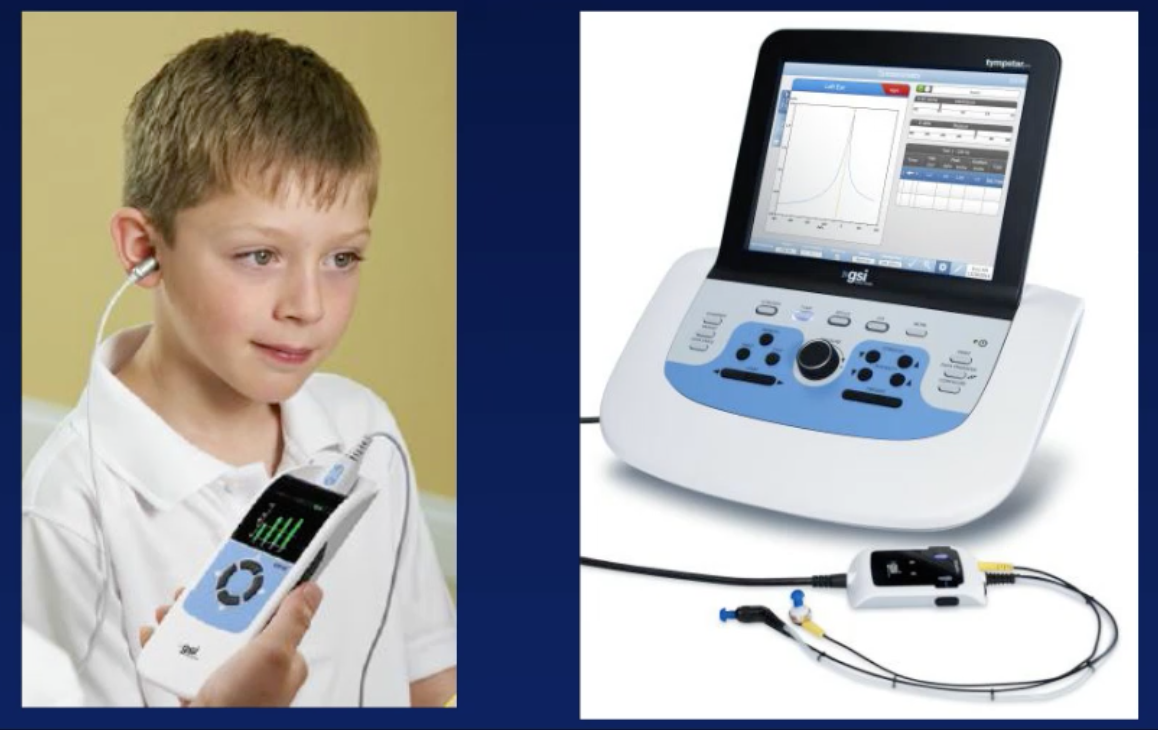
The Important Role Of Otoacoustic Emissions Oaes In Preschool Hearing Screening James W Hall Hearing Evaluation Children Otoacoustic Emissions Pediatrics 22091
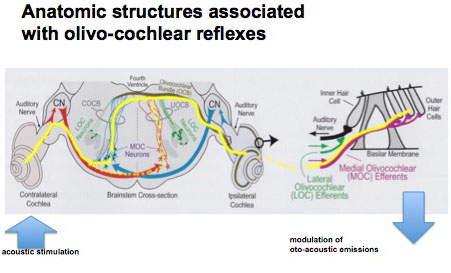
Otoacoustic Emissions Auditory Science Lab

Distortion Product Otoacoustic Emissions Measured As Vibration On The Eardrum Of Human Subjects Pnas
Otoacoustic Emission An Overview Sciencedirect Topics
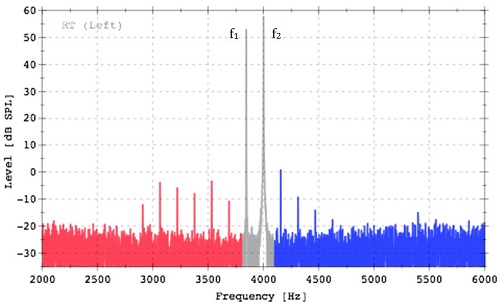
Oaes Sound Clinical Tool Sumitrajit Dhar 20q With Gus Mueller Otoacoustic Emissions 12801
2
Examples Of Three Types Of Otoacoustic Emissions A Spectral Average Download Scientific Diagram

Audiometry Exam 3 Flashcards Quizlet

Examples Of Three Types Of Otoacoustic Emissions A Spectral Average Download Scientific Diagram
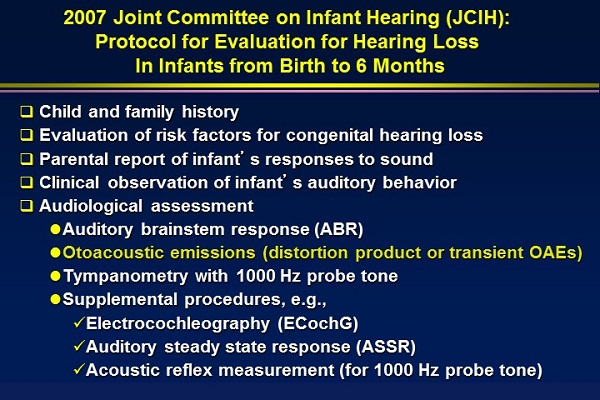
A Clinician S Guide To Oae Measurement And Analysis James W Hall Iii Otoacoustic Emissions Va Selections 14981

Change In Strength Of Otoacoustic Emissions Oae With Age For A Download Scientific Diagram
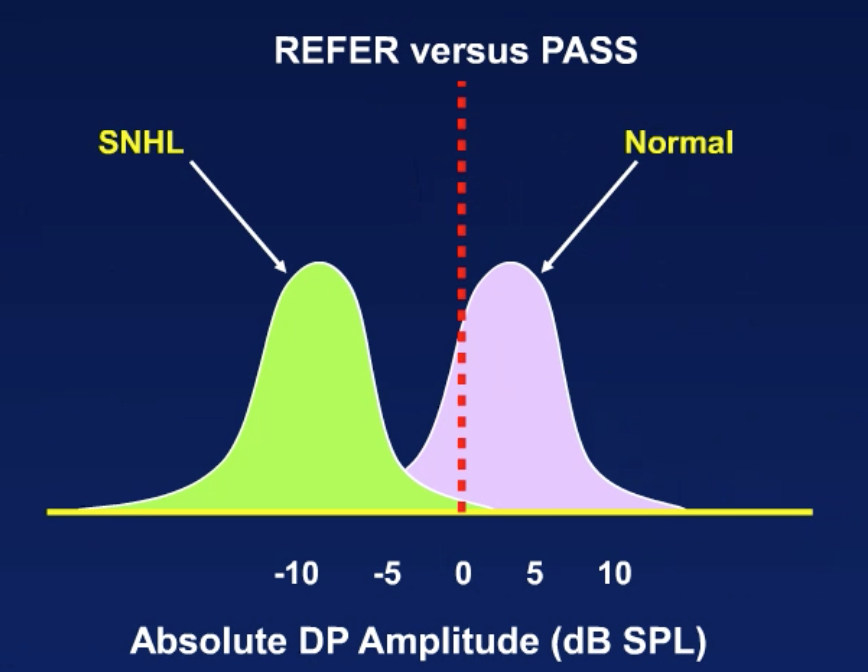
The Important Role Of Otoacoustic Emissions Oaes In Preschool Hearing Screening James W Hall Hearing Evaluation Children Otoacoustic Emissions Pediatrics 22091
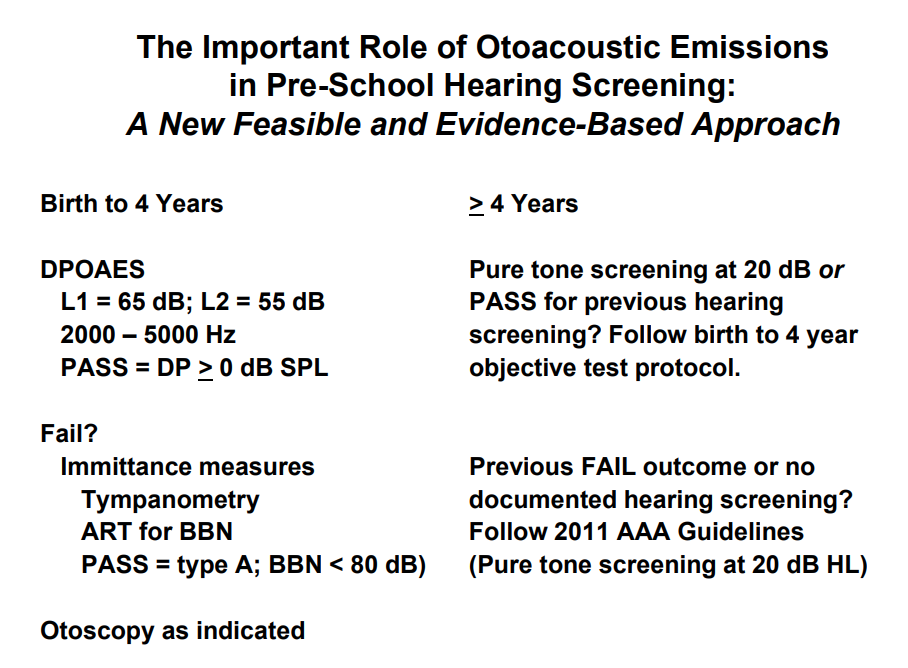
The Important Role Of Otoacoustic Emissions Oaes In Preschool Hearing Screening James W Hall Hearing Evaluation Children Otoacoustic Emissions Pediatrics 22091

Otoacoustic Emissions And Pressurized Oaes
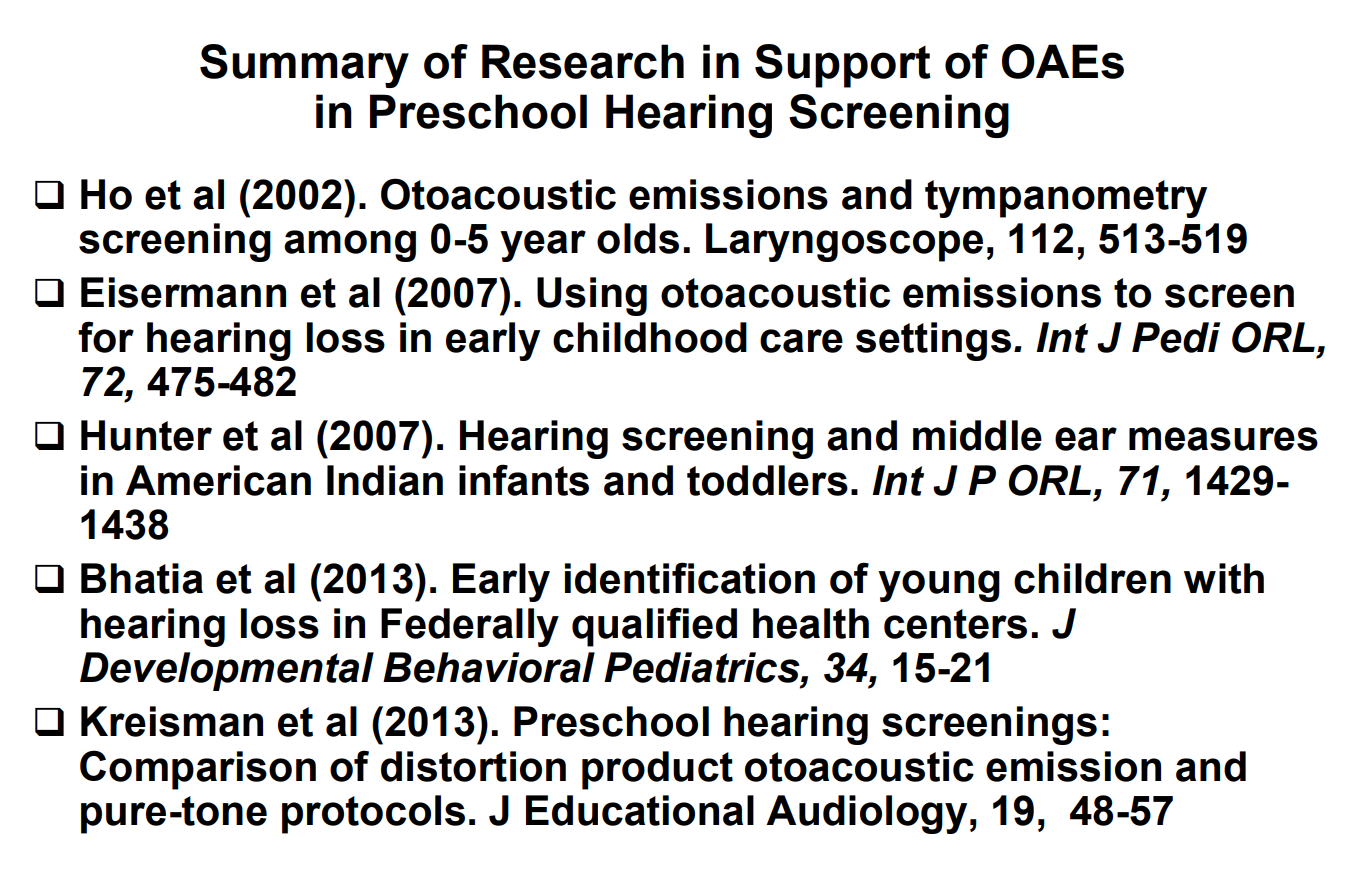
The Important Role Of Otoacoustic Emissions Oaes In Preschool Hearing Screening James W Hall Hearing Evaluation Children Otoacoustic Emissions Pediatrics 22091

Evoked Otoacoustic Emission An Overview Sciencedirect Topics
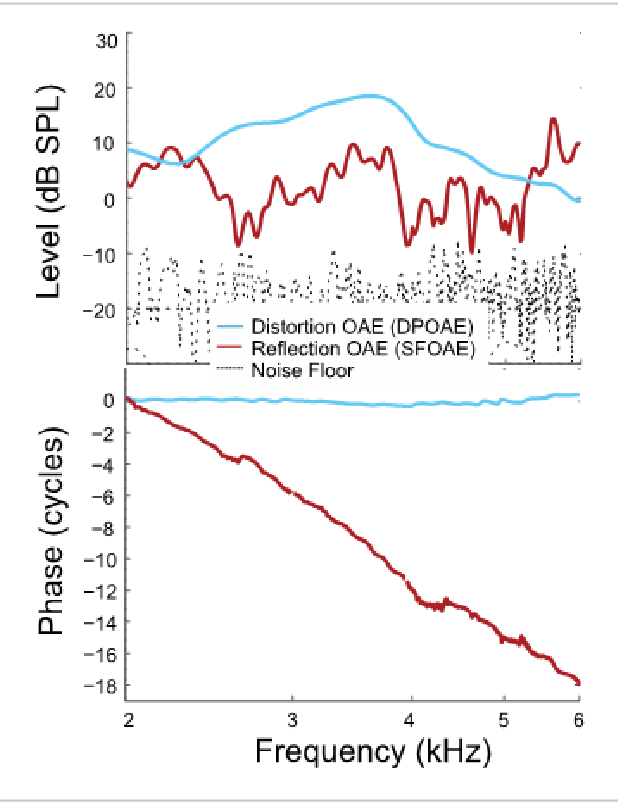
The Strategic Application Of Otoacoustic Emissions To Infants And Children Semantic Scholar
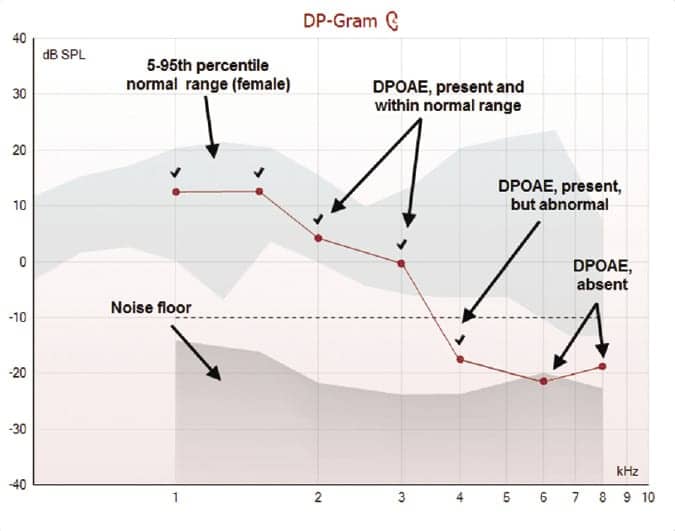
An Overview Of Oaes And Normative Data For Dpoaes The Hearing Review


Comments
Post a Comment